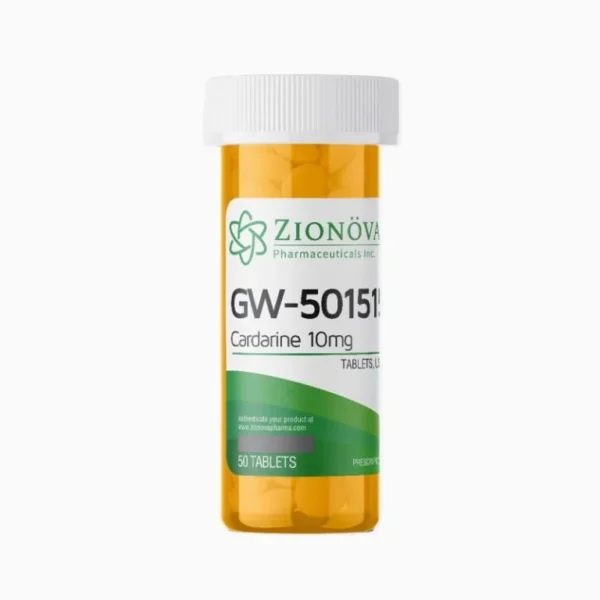
GW-501516 (10MG) (50 TABLETS)
GW-501516 (10MG) (50 TABLETS) is a widely researched metabolic performance compound classified as a selective PPARδ receptor agonist. It has gained significant attention in scientific, fitness research, and biohacking communities due to its potential role in improving endurance capacity, fat oxidation, and overall energy efficiency.
Unlike anabolic steroids or SARMs, GW-501516 (10MG) (50 TABLETS) does not directly interact with androgen or estrogen receptors. Instead, it works through metabolic pathways that regulate how the body utilizes fat and glucose for energy production.
Because of this unique mechanism, it has become one of the most discussed compounds in endurance and body recomposition research discussions worldwide.
What Is GW-501516 (10MG) (50 TABLETS)?
GW-501516 (10MG) (50 TABLETS) contains GW-501516, commonly known as Cardarine, a synthetic compound developed to activate PPARδ (Peroxisome Proliferator-Activated Receptor Delta).
PPARδ is a nuclear receptor that plays a key role in:
Fat metabolism regulation
Energy homeostasis
Mitochondrial function
Glucose utilization
Endurance performance pathways
Each bottle contains 50 tablets, with each tablet delivering 10mg of GW-501516.
This precise dosing structure makes it suitable for controlled research-based applications where consistency and measurement accuracy are essential.
How GW-501516 (10MG) (50 TABLETS) Works in the Body
The mechanism of GW-501516 (10MG) (50 TABLETS) is centered around activation of PPARδ receptors found in muscle tissue, liver, and fat cells.
Once activated, these receptors influence gene expression related to energy metabolism.
Key Biological Actions:
Increases fatty acid oxidation (fat burning as fuel)
Enhances mitochondrial energy efficiency
Improves glucose uptake and utilization
Supports endurance-related energy pathways
Reduces reliance on glycogen stores during prolonged activity
This metabolic shift allows the body to use stored fat more efficiently as a primary energy source, particularly during physical activity.
Why GW-501516 (10MG) (50 TABLETS) Is Popular in Research Communities
The popularity of GW-501516 (10MG) (50 TABLETS) comes from its unique metabolic profile and its distinction from hormonal compounds.
1. Non-Hormonal Mechanism
Unlike anabolic steroids or SARMs, GW-501516 does not interfere with testosterone or estrogen production.
2. Endurance Research Interest
It has been widely studied in endurance-related metabolic research models.
3. Fat Utilization Focus
Its strong association with fat oxidation makes it appealing in body recomposition discussions.
4. Oral Convenience
Tablet form allows easy administration in controlled research environments.
5. Metabolic Flexibility
It supports the body’s ability to switch between carbohydrate and fat energy sources.
Benefits of GW-501516 (10MG) (50 TABLETS)
1. Endurance Performance Support (Research-Based)
One of the most well-known associations of GW-501516 (10MG) (50 TABLETS) is improved endurance capacity in experimental models. It is studied for its ability to enhance stamina and prolong physical activity duration.
2. Increased Fat Oxidation
GW-501516 enhances the body’s ability to burn fat as a primary energy source. This is particularly important in:
Cutting phases
Energy efficiency research
Metabolic flexibility studies
3. Energy Efficiency Optimization
By improving mitochondrial function, it may support more efficient energy production at a cellular level.
4. Non-Androgenic Profile
It does not bind to androgen receptors, meaning:
No direct testosterone suppression
No estrogenic activity
No androgenic side effects (theoretical advantage)
5. Improved Fuel Utilization
It helps shift energy preference toward fatty acids instead of carbohydrates during physical activity.
6. Oral Administration Convenience
The tablet form makes it easy to handle in structured research cycles without injections or complex delivery systems.
GW-501516 (10MG) (50 TABLETS) and Body Recomposition
Body recomposition refers to the simultaneous process of fat loss and muscle maintenance.
GW-501516 (10MG) (50 TABLETS) is often discussed in this context due to:
Increased fat utilization
Improved energy output during training
Support for prolonged exercise sessions
Metabolic efficiency enhancement
These properties make it popular in cutting-phase research discussions.
Who Uses GW-501516 (10MG) (50 TABLETS)?
This compound is primarily discussed in non-medical and research-based environments, including:
Fitness researchers
Body recomposition enthusiasts
Endurance training analysts
Biohacking communities
Experimental metabolic studies
It is important to emphasize that it is not approved for general medical use in many countries.
Dosage Information (Research Context Only)
There is no officially approved medical dosage for GW-501516.
However, in research discussions, usage patterns typically involve:
Fixed daily intake schedules
Cycle-based usage structures
Controlled duration protocols
Monitoring of metabolic response
Important Note:
Dosage varies significantly depending on research design and individual response. It should always be approached with caution due to limited human clinical data.
Possible Side Effects of GW-501516 (10MG) (50 TABLETS)
Although widely discussed in research communities, GW-501516 (10MG) (50 TABLETS) may present potential risks.
Reported or Theoretical Side Effects:
Headaches
Fatigue in some users
Changes in lipid profile
Metabolic adjustments
Limited long-term safety data in humans
Safety Considerations
Long-term human studies are limited
Regulatory agencies have restricted its use in many regions
Product quality may vary in unregulated markets
GW-501516 (10MG) (50 TABLETS) vs SARMs
Mechanism
GW-501516: PPARδ agonist
SARMs: Androgen receptor modulators
Hormonal Activity
GW-501516: Non-hormonal
SARMs: Hormonal interaction (selective androgen activity)
Primary Focus
GW-501516: Endurance and metabolism
SARMs: Muscle growth and preservation
Cycle Considerations (Research Discussion Only)
In fitness research environments, compounds like GW-501516 are often used in structured cycles.
Common patterns include:
Short-term use phases
Rest and evaluation periods
Performance tracking cycles
Metabolic response monitoring
These are not medical recommendations, but general research observations.
Storage Instructions
To maintain product integrity:
Store in a cool, dry place
Avoid direct sunlight
Keep container tightly closed
Protect from moisture
Keep out of reach of children
Important Safety and Legal Notice
GW-501516 (10MG) (50 TABLETS) is not approved for human therapeutic use in many countries.
Users should be aware of:
Regulatory restrictions
Limited long-term human safety data
Variability in product quality
Research-only classification in many regions
Frequently Asked Questions (FAQs)
What is GW-501516 used for?
It is studied for endurance enhancement, fat metabolism, and energy efficiency in research settings.
Is GW-501516 a steroid or SARM?
No. It is a PPARδ receptor agonist, not a steroid or SARM.
Does it build muscle?
Not directly. It is more associated with endurance and fat metabolism.
Is it safe for human use?
Safety data is limited, and it is not approved for medical use in many regions.
Why is it popular in fitness research?
Because of its potential effects on endurance, fat oxidation, and metabolic efficiency.
Does it affect hormones?
No direct interaction with testosterone or estrogen pathways.
PubMed Research Database
World Anti-Doping Agency (WADA)
Final Thoughts
GW-501516 (10MG) (50 TABLETS) remains one of the most widely discussed metabolic research compounds due to its unique ability to influence fat oxidation and endurance-related energy pathways. Its non-hormonal mechanism makes it distinct from SARMs and anabolic agents, positioning it primarily within endurance and metabolic research categories.
However, due to limited human safety data and regulatory restrictions in many regions, it should be approached strictly as a research compound with careful awareness of its experimental nature.